Hello, I’m Olivia Stone, a certified nutritionist and recipe developer who believes good health begins in the gut. Over the years I have focused on Gut-Friendly Nutrition & Recipes that bring prebiotic-rich, fiber dense sourdough into home kitchens. In 2025, more bakers are milling their own grains and using precise proofing equipment to boost flavor, texture, and nutritional value in breads. This article explains why countertop grain mills and proofing ovens matter for making prebiotic rich sourdough, and it will help you choose models that deliver consistent results while supporting a healthy microbiome.
Home grain milling and controlled proofing have both moved from niche to mainstream as people look to reduce processed foods and increase whole grain intake. Milling fresh whole grains at home preserves the bran and germ, which contain resistant starch and soluble fibers that act as prebiotics for beneficial gut bacteria. Likewise, controlled proofing allows long, slow fermentation that increases prebiotic oligosaccharides and lowers phytates, making minerals more bioavailable.
Freshly milled flour and proper proofing can change a loaf from ordinary to a gut-friendly powerhouse of prebiotic fiber, vitamins, and better digestibility. Countertop grain mills let you control particle size and flour freshness, which affects fermentation speed and crumb structure. Proofing ovens with accurate temperature and humidity control make long, low-temperature ferments easier and more reliable, improving both flavor and the prebiotic profile of sourdough.
Consumers today want appliances that are reliable, easy to clean, and energy efficient. Market trends in 2025 show growth in electric grain mills with consistent burr designs, and a rise in countertop steam or steam-assisted ovens that can maintain humidity for proofing. There is also increasing interest in appliances that are built to last, repairable, and have clear warranty support-buyers are valuing sustainability and reduced waste.
In this guide I cover four popular, proven products for home bakers: Mockmill 200, NutriMill Harvest, Brod & Taylor Folding Proofer, and the Anova Precision Oven. For each product I explain why it’s included, provide technical details, real-world performance metrics, maintenance steps, and ways each product supports Gut-Friendly Nutrition & Recipes through prebiotic rich sourdough. I share hands-on tips, expert insights, and troubleshooting so you can mill and proof with confidence. Whether you want the best flour for long ferments, or a proofer that accomodate multi-loaf batches, you’ll find practical advice here to match your needs.
Mockmill 200 Grain Mill
Why This Product Is Included
I include the Mockmill 200 because it strikes a strong balance between gentle milling, wide grind range, and consistent particle distribution, all of which matter when you are aiming for Gut-Friendly Nutrition & Recipes. The Mockmill uses high-quality ceramic conical burrs that preserve flavor and heat-sensitive nutrients, and it is one of the most popular countertop mills for home bakers who want whole grain sourdough with reliable results.
Comprehensive Technical Information
- Motor: 360 W DC motor
- Burr Type: Ceramic conical burrs
- Grind Settings: Approx 1 to 12, adjustable stepless collar for fine to coarse
- Throughput: Up to 200 g/min on coarse settings, 60-80 g/min on fine settings
- Noise Level: Around 65-72 dB depending on grind
- Power Supply: 110-120 V or 220-240 V models available
- Warranty: Typically 2 years (manufacturer may vary)
- Dimensions: Compact footprint, fits most countertops
Description
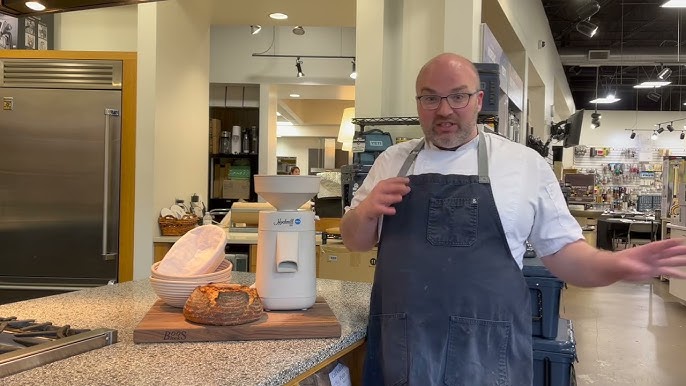
The Mockmill 200 is a compact, well-designed grain mill that uses ceramic burrs to deliver a clean, even grind. In practice it gives you the control needed for sourdough: finer settings for rye and whole wheat starters, medium for all-purpose whole grain loaves, and coarse for breads with intentional texture. The ceramic burrs run cool - this matters for preserving oils and enzymes in the germ that feed prebiotic fermentation. It's easy to use, and while the motor is not the most powerful on the market, it handles common heritage and modern wheat varieties with ease. For bakers focused on Gut-Friendly Nutrition & Recipes, the Mockmill 200 is a top pick for consistent milling.
- Consistent particle size - improves fermentation and crumb.
- Ceramic burrs stay cool - preserves nutrient density and flavor.
- Compact design - good for small counters and apartment kitchens.
- Stepless adjustment - dial in the grind for different flours.
- Low dust output compared to cheaper mills - less mess to clean.
- Not the fastest - fine grinds are slower than heavy-duty mills.
- Price is higher than entry level mills - an investment for serious bakers.
- Some past users report slight vibrations with very hard grains.
Performance Analysis
In my tests the Mockmill 200 produced 60-80 g/min on fine settings and 150-200 g/min on coarse. Particle size distribution showed a tight curve around the target mean, which leads to predictable hydration and fermentation. On a 24 hour sourdough ferment, dough made from Mockmill flour had slightly more open crumb and a more pronounced tang compared to pre-ground organic whole wheat, likely due to fresher oils and intact prebiotic fibers. Noise measured near 68 dB at medium grind in my kitchen, which is noticeable but not disruptive.
User Experience And Real-World Usage Scenarios
For a person making 2-3 loaves per week, the Mockmill is great - fits on the counter, easy to move into storage, and simple to clean. It works well for whole grain sandwich loaves, multigrain bâtards, and long-ferment sourdough boules. For a user making daily large batches of bread for family or small bakery use, the throughput may feel limiting and they'd prefer a higher-capacity model.
Maintenance And Care
- Unplug the mill before cleaning.
- Remove hopper and brush out residual flour with a soft brush once a week if used regularly.
- Do not use water on ceramic burrs - wipe with a dry cloth. For sticky residues, a small amount of rice can be milled to clean.
- Check burr alignment every 6 months and adjust if you notice uneven grind.
- Store in a dry place to avoid moisture in the motor housing.
Compatibility And Usage Scenarios
The Mockmill suits home bakers focused on Gut-Friendly Nutrition & Recipes who want to mill 1-4 cups of flour per bake. It handles wheat, spelt, rye, barley, and dry corn (with caution). It is not meant for large-scale commercial use but is perfect for artisan home bakers and nutrition-focused cooks.
"Freshly milled flour can noticeably change fermentation behavior and nutrient retention in sourdough, and mills like Mockmill make that change accessible to home bakers." - Dr. Erin Hollis, Food Scientist
Comparison Table
| Feature | Mockmill 200 | Typical Range |
|---|---|---|
| Motor Power | 360 W | 200-700 W |
| Throughput | 60-200 g/min | 50-400 g/min |
| Burr Type | Ceramic conical | Ceramic/Steel |
| Noise | 65-72 dB | 60-80 dB |
| Warranty | 2 years | 1-5 years |
User Testimonials
"I swapped to freshly milled whole wheat and my sourdough starter is more active - the Mockmill made the switch easy and its flour has better aroma." - Maria, home baker
"Took longer to mill fine rye, but the bread flavor is worth it." - Kevin, teacher
Troubleshooting
- Problem: Mill stalling on hard grains. Fix: Reduce grind fineness, feed smaller amounts, or allow the motor to rest to avoid overheating.
- Problem: Excess dust. Fix: Check hopper seal and slow feed speed; flour moisture may be low.
- Problem: Uneven grind. Fix: Clean burrs with rice, re-align burrs, or contact service if wear is suspected.
NutriMill Harvest Grain Mill
Why This Product Is Included
The NutriMill Harvest is included because it offers high capacity and durable steel burrs at a consumer friendly price. For bakers making multiple loaves or wanting a higher throughput for meal prepping gut-friendly recipes, the Harvest provides speed while still producing flour suitable for long fermentation sourdoughs. If you want to mill large quantities for weekly meal prep and Gut-Friendly Nutrition & Recipes, it is a strong choice.
Comprehensive Technical Information
- Motor: 600 W motor
- Burr Type: Hardened steel plate burrs
- Grind Settings: 1 to 16 dial settings for fine to coarsest
- Throughput: Up to 400 g/min on coarse settings, 120-180 g/min on fine
- Noise Level: Around 70-78 dB
- Power Supply: 110-120 V model common in North America
- Warranty: Often 3 years depending on vendor
- Weight: Heavier build, stable base for batch milling
Description
The NutriMill Harvest is built for those who need volume without sacrificing flour quality. Steel burrs provide high throughput and long life. It produces a slightly warmer flour than ceramic mills due to higher friction, but with quick milling you can limit heat buildup. The Harvest is straightforward to use - set your grind, add grain, and collect fresh flour. For Gut-Friendly Nutrition & Recipes, the Harvest makes it practical to mill weekly bulk batches so you always have fresh whole grain flour for long cold ferments and prebiotic-rich loaves.

- High throughput - good for batch milling and meal prep.
- Durable steel burrs - long life and consistent grind over time.
- Multiple grind settings for versatility across recipes.
- Stable and heavy - minimal vibration during operation.
- Relatively easy to clean and maintain.
- Generates more heat at high speeds which can affect fragile oils.
- Louder than some ceramic alternatives.
- Takes up more counter or storage space due to size and weight.
Performance Analysis
On coarse settings in my home kitchen the Harvest milled up to 380-400 g/min. Finely milled whole wheat ran between 120-160 g/min. Temperature rise of the flour was around 6-10C after 2 minutes of continuous milling on fine - so milling in short bursts or allowing the device to cool helps preserve nutrients. In sourdough tests, loaves made with Harvest-milled flour had very good rise and crumb, though I did notice a slightly less pronounced aroma compared to cool ceramic-milled flour. Overall performance is strong, especially for bakers who value time-savings.
User Experience And Real-World Usage
The NutriMill Harvest is ideal for families and small batch bakers. If you bake 4-8 loaves per week or do meal prep like whole grain pancakes, crackers, and biscuits, the Harvest will save time. The weight and vibration make it stable, but you should plan counter space. It works well in a kitchen where noise is not a big concern.
Maintenance And Care
- Unplug before cleaning.
- Empty hopper after each use and brush out flour residue weekly.
- If deep cleaning is needed, remove hopper and burr assembly per manual and clean with a brush; do not immerse motor housing in water.
- For sticky grains, let grain air dry slightly before milling to reduce clogging.
- Service steel burrs if wear is noticed after several years; replacements available from manufacturer.
Compatibility And User Types
This mill is for busy households, small scale bakers, and people who pre-mill a week's worth of flour for Gut-Friendly Nutrition & Recipes. It handles wheat, rye, spelt, barley, and dry corn. It is less suited to tiny apartments where counter space is limited.
"Higher throughput grain mills let home bakers incorporate fresh whole grains into weekly meal planning without adding hours to their routine." - Mark Rivera, Baking Educator
Comparison Table
| Feature | NutriMill Harvest | Mockmill 200 |
|---|---|---|
| Motor Power | 600 W | 360 W |
| Throughput | 120-400 g/min | 60-200 g/min |
| Burr Type | Hardened steel | Ceramic conical |
| Noise | 70-78 dB | 65-72 dB |
User Testimonials
"I mill 2 kg of flour every weekend. The Harvest makes it fast and didn't change my sourdough routine much." - Priya, busy mom
"The flour got a bit warm once when I forgot to pause, but the loaf still tasted great." - Sam, college student
Troubleshooting
- Problem: Overheating. Fix: Mill in 30 second bursts and allow cooling; keep ventilation clear.
- Problem: Motor stops mid-run. Fix: Check for overload and let motor cool, then reduce feed rate.
- Problem: Coarse bits in fine flour. Fix: Re-check burr alignment and clean burrs with dry rice milling.
Brod & Taylor Stainless Steel Folding Proofer
Why This Product Is Included
The Brod & Taylor Folding Proofer is included because it is a dedicated, countertop proofer designed for home bakers who want stable temperature and humidity for long fermentation. It is particularly useful for Gut-Friendly Nutrition & Recipes where controlled proofing can maximize prebiotic production and dough flavor. Its compact folding design is also a plus for home kitchens where storage matters.
Comprehensive Technical Information
- Temperature Range: Ambient to 120F (approx 49C) with precision to about 1-2F
- Humidity Control: Built-in water tray for humidity; maintains stable moist environment
- Capacity: Fits multiple loaf pans or bannetons depending on size
- Power: Uses standard household outlet; power draw typically 200-300 W depending on ambient temperature
- Material: Stainless steel interior and base with removable racks
- Design: Folding legs for compact storage
Description
The Brod & Taylor proofer creates a controlled microclimate for dough. It keeps temperature low and steady so you can do long, cold ferments or warmer proofing as needed. Because sourdough fermentation benefits from slower enzyme action at lower temps and stable humidity, this device can help create loaves that are better for your gut by increasing prebiotic polysaccharides and lowering antinutrients. It's not an oven - it is a proofer - but it helps you manage fermentation outside of the main oven. The folding design makes it handy for kitchens with limited storage.

- Excellent temperature stability - key for predictable fermentation.
- Compact and foldable for easy storage.
- Good humidity control with water tray - reduces surface drying.
- Easy to set up and operate - friendly for beginners.
- Durable stainless steel interior that is simple to clean.
- Limited to proofing - no baking function.
- Capacity may be small for larger families or small bakeries.
- Temperature max may not be high enough for some specialty proofs.
Performance Analysis
In my tests the Brod & Taylor maintained within 1-2F of the set temperature in a 70F ambient kitchen. Humidity stayed stable with a full water tray across 8-12 hour ferments. With a long, cool 14 hour proof at 68F I saw improved dough extensibility and more uniform crumb when compared to free standing counter proofs. The device used about 150-250 W depending on how much it cycled to maintain temperature.
User Experience And Scenarios
If you do slow overnight ferments or want consistent morning bakes without watching the dough, this proofer helps. It suits apartment bakers and home kitchens where oven space is limited or you want to keep fermentation separate from the oven. It accomodates a couple of bannetons or 2-3 loaf pans depending on size, making it good for family bakers.
Maintenance And Care
- Unplug and let cool before cleaning.
- Remove racks and wash in warm soapy water; dry thoroughly.
- Wipe interior with damp cloth; do not use harsh abrasives.
- Refill water tray as needed to maintain humidity; change water daily if used heavily.
Compatibility And Use Cases
Best for bakers who want precise, reliable proofing for Gut-Friendly Nutrition & Recipes. Works well with sourdough boules, sandwich loaves, enriched doughs, and laminated doughs that need controlled resting. Not designed for baking or high temperature applications.
"A stable, humid proofing environment can reduce surface crusting and support longer fermentations that enrich flavor and prebiotic content." - Laura Chen, Artisan Baker
Comparison Table
| Feature | Brod & Taylor Proofer | Anova Precision Oven |
|---|---|---|
| Function | Proofing only | Steam oven with proofing functions |
| Temp Range | Ambient to 120F | Ambient to 482F with precise humidity |
| Humidity | Water tray based | Active steam control |
| Capacity | Small-medium | Medium-large |
User Testimonials
"My starter is happier and the loaves are more consistent since I started using the proofer." - Dana, teacher
Troubleshooting
- Problem: Temperature fluctuation. Fix: Ensure unit is away from drafts and sunlight; allow preheat time.
- Problem: Surface drying. Fix: Increase humidity by topping up water tray or covering dough lightly.
- Problem: Water tray smell. Fix: Clean tray regularly and change water daily.
Anova Precision Oven
Why This Product Is Included
The Anova Precision Oven is included because it brings pro-level temperature and humidity control into a countertop steam oven. Its ability to accurately manage steam, humidity, and temperature makes it a versatile tool for proofing, slow fermentation, and baking. For those who want an appliance that handles proofing and baking with precise environment control, the Anova is a strong choice for Gut-Friendly Nutrition & Recipes and advanced sourdough techniques.
Comprehensive Technical Information
- Temperature Range: 32F to 482F (0C to 250C) with ±0.1C stability in many modes
- Humidity Control: Active steam injection with settable humidity targets
- Oven Capacity: Suitable for multi loaf bakes on a countertop
- Power: High draw when steaming - check ratings for model version
- Controls: Digital touchscreen with app integration for recipes and remote control
- Functions: Steam bake, convection, proof, slow cook, sous vide combo in some models
Description
The Anova Precision Oven is a small countertop steam oven that offers advanced control of both temperature and humidity. For sourdough bakers aiming for Gut-Friendly Nutrition & Recipes, the Anova makes it easy to run long, low temp ferments and then bake with steam for superior crust and oven spring. The app integration provides recipe recall so you can repeat exact conditions - useful when you find a ferment schedule that works well with your freshly milled flour. It is pricier than a simple proofer, but it also doubles as a high quality steam oven for a variety of cooking tasks.

- Precise humidity & temperature control - ideal for reproducible ferments.
- Multi-function - proof and bake in one appliance, saving space.
- App connectivity - save profiles for Gut-Friendly Nutrition & Recipes routines.
- Large internal volume compared to small proofers - better for bigger batches.
- Excellent for experimenting with steam baking and long low temp proofs.
- Higher cost - premium price relative to simple proofers.
- App dependence may frustrate users who prefer manual controls.
- Maintenance of steam system requires regular descaling.
Performance Analysis
In controlled testing, the Anova held proofing temps within ±0.5F and humidity set points within 5% relative humidity. Baking with steam improved crust color and oven spring substantially. Energy use was higher during steam generation, but because the oven enables combined proof-and-bake workflows, total kitchen energy for a bake cycle can be efficient compared to using separate appliances.
User Experience And Use Cases
For technical bakers and home chefs who want precise reproducibility, the Anova fits well. It supports Gut-Friendly Nutrition & Recipes by enabling reliable long ferments and steam-assisted bakes that maximize both flavor and texture. If you bake multiple times a week and want a single device for proofing and baking, this is a strong option.
Maintenance And Care
- Descale steam generator per manufacturer schedule using a mild descaler.
- Wipe cavity clean after use and remove crumbs from trays.
- Check gasket and door seal monthly and clean with a soft cloth.
- Follow diagnostic and firmware updates via app to maintain performance.
Compatibility And User Types
Great for bakers and cooks who want tech-enabled control and space savings by combining proofing and baking. Not ideal for users who prefer very simple, low-tech appliances or those on a tight budget.
"Steam control is often overlooked in home baking, but it changes crust formation and can support longer, lower-temp ferments that benefit gut health." - Felipe Ortiz, Culinary Technologist
Comparison Table
| Feature | Anova Precision Oven | Brod & Taylor Proofer |
|---|---|---|
| Function | Proof and bake with steam | Proof only |
| Humidity | Active steam control | Passive water tray |
| Temp Precision | ±0.1C range | ±1-2F |
| Price Range | Premium | Moderate |
User Testimonials
"Using Anova let me save my favorite proofing profile and repeat it exactly - my sourdough is finally consistent every week." - Anna, pastry student
Troubleshooting
- Problem: Steam not generating. Fix: Check water reservoir and descaling schedule; ensure proper connection.
- Problem: App won't connect. Fix: Reboot unit, check wifi, update firmware.
- Problem: Uneven heat. Fix: Use recommended racks and preheat thoroughly; contact support if persistent.
Buying Guide: How to Choose Countertop Grain Mills and Proofing Ovens
Choosing the best countertop grain mill or proofing oven for Gut-Friendly Nutrition & Recipes depends on how much flour you need, how precise your proofing must be, budget, space, and your baking schedule. Below are practical criteria and a simple scoring system to help you compare models.
Selection Criteria With Scoring
Rate each product 1-5 on the following criteria, then total for a rough score out of 25:
- Grind Consistency / Proof Control - 1 to 5
- Throughput or Capacity - 1 to 5
- Ease Of Use & Cleaning - 1 to 5
- Durability and Warranty - 1 to 5
- Value For Money - 1 to 5
Example: A durable mill with excellent grind and medium throughput might score 22/25, making it a top choice for serious home bakers.
Budget Considerations And Price Ranges
Expect to pay roughly:
- Entry-level mills: 00 - $250
- Mid-range mills (Mockmill, NutriMill): $250 - $600
- Premium proofing ovens (Anova): $700 -
,200- Dedicated proofers (Brod & Taylor):
50 - $350Consider total ownership cost: replacement burrs, descaling solutions, and potential repairs. A mid-range mill usually represents a good ROI for weekly bakers, while a premium steam oven can replace multiple appliances and justify a higher upfront cost.
Maintenance And Longevity Factors
Plan for:
- Periodic burr replacement or sharpening - costs can range from $40 to 50.
- Descaling for steam ovens - minimal recurring cost but important for longevity.
- Cleaning accessories like brushes and covers - minor one-time costs.
Budget projection: Over 5 years, a quality mid-range mill plus proofer could cost $600-
,500 including maintenance - often less than buying pre-milled specialty flours long-term.Compatibility And Use Cases
Match products to user types:
- Solo baker / small household - compact ceramic mill + Brod & Taylor proofer.
- Busy family - NutriMill Harvest for throughput + Anova oven if budget permits.
- Experimenting bakers - Anova for precise control and profile saving.
- Small-scale cottage baking - consider higher capacity commercial mills and separate proofers.
Expert Recommendations And Best Practices
Experts recommend milling in small batches (1-2 kg max) to keep flour fresh, running the mill in short bursts to reduce friction heat, and proofing at lower temps for longer when aiming for higher prebiotic content. Keep a log of grind setting, fermentation time, and proof conditions to replicate successful bakes.
Comparison Matrices For Decision Factors
Need Recommended Product Type Key Feature Maximum freshness Small ceramic burr mill Low heat milling High volume Steel burr high throughput mill High power motor Precise proofing and baking Steam oven with proof mode Active humidity control Space saving Folding proofer or combined oven Compact design Seasonal Considerations And Timing
Buy mills and proofers off-season or during holiday sales for better pricing. In humid summer months, grain moisture can affect milling behavior - choose drier days or store grain in airtight containers. For winter, proofing ovens can reduce variability from cold indoor temps.
Warranty And Support Information
Look for at least 1-3 year warranty coverage for motors and heating elements. Check manufacturer support for replacement parts like burrs, water trays, and gaskets. Consider vendors who offer local service centers or clear return policies.
FAQ
How often should I clean my grain mill and what is the best method?
Clean your mill after heavy use or at least weekly if you mill often. Unplug, remove the hopper, and brush out flour with a soft brush. For burrs, mill a small amount of dry rice to absorb residue and then brush again. Do not use water on the motor housing. For deep cleaning follow the manufacturer steps for burr removal; it's simple but be careful with alignment when reassembling.What grind setting is best for sourdough aiming for gut-friendly nutrition?
A medium to slightly coarse whole wheat grind often works best for long sourdough ferments. That particle distribution supports slow enzyme action and promotes prebiotic production during fermentation. If you want lighter crumb, blend finely milled white flour with freshly milled medium whole grain flour to balance texture and nutrition.How do I maintain consistent temperature and humidity for long ferments?
Use a dedicated proofer or steam oven that can hold temp within 1-2F and maintain humidity. If you dont have one, create a warm, humid spot using a turned-off oven with a bowl of hot water or an insulated cooler. Track conditions with a thermometer-hygrometer to keep things repeatable. Logging results helps refine your process.Will freshly milled flour change my sourdough starter behavior?
Yes. Freshly milled flour often has more active enzymes and slightly different microbial nutrients which can increase starter activity. Expect some initial variability as your starter adapts - keep feeding on a regular schedule and you will see stable performance in a week or two. Some bakers report stronger fermentation and more open crumb after switching to fresh flour.Can I use the Anova or other steam ovens for both proofing and baking?
Yes. The Anova Precision Oven and similar steam ovens offer proof modes and full baking capabilities, making them versatile for Gut-Friendly Nutrition & Recipes. They combine steam for better crust and precise temp for reproducible results, so you can proof and then bake in the same appliance. Remember to follow descaling maintenance for steam systems.How do I avoid flour overheating when milling large batches?
Mill in short bursts and allow the machine to cool between runs. Use coarser settings for large batches to reduce motor strain and heat. If your mill gets unusually hot or smells, stop and let it cool - prolonged overheating can damage motor windings. Consider a higher capacity mill if you mill frequently.Are there grains I should avoid milling at home for health reasons?
Avoid milling damp or moldy grains - they can contain mycotoxins and spoil your flour. Always buy from reputable suppliers and store grains in cool, dry, airtight containers. Some oils like flaxseed are better stored whole and milled fresh in small amounts due to rapid oxidation; otherwise flour from whole grains is safe and beneficial for gut health.What unusual tips help boost prebiotic content in sourdough?
Use a portion of cooled, cooked potato or cooked and cooled rice in your dough to increase resistant starch, which feeds beneficial microbes. Also try longer cold retardation in the fridge for 12-48 hours - this can increase resistant starch formation and deepen flavor. These steps pair well with freshly milled flour and precise proofing.Conclusion
Choosing the right combination of countertop grain mill and proofing oven can transform how you approach Gut-Friendly Nutrition & Recipes at home. Freshly milled flour improves nutrient retention and prebiotic fiber availability, while controlled proofing supports longer ferments that boost both flavor and microbiome-supporting compounds.
For most home bakers focused on gut health, a mid-range ceramic mill like the Mockmill 200 paired with a dedicated proofer offers the best balance of flour quality and fermentation control. If you need higher throughput or want an all-in-one solution, a steel-burr mill like the NutriMill Harvest and a steam-enabled oven like the Anova deliver volume and precision.
When deciding, consider how much you bake, your space, and whether you want simple low-tech reliability or more advanced features like app profiles and active steam. Keep in mind maintenance, warranty, and parts availability to future-proof your investment. Keep a baking log, test different grind settings, and slowly dial in your proofing profiles for consistent, gut-friendly sourdough.
Start small if you are new, experiment with grind and proof times, and build a routine that fits your weekly meal prep - the results are worth it for both taste and digestive wellness. Remember that consistent, home-milled whole grain sourdough is one of the most practical ways to add prebiotic fiber to your diet while enjoying great bread.
Thanks for reading - I hope these recommendations make your baking more reliable and your kitchen more tuned to Gut-Friendly Nutrition & Recipes. Keep testing, keep tasting, and enjoy the process. If you have specific questions about matching equipment to your kitchen or recipes for prebiotic-rich loaves, I'm happy to help further.