Hello, I’m Dr. Mia Laurent, a naturopathic doctor and researcher with over 15 years working in digestive health and detox science. In 2025 there is growing interest in personal health tech that helps people track gut function at home, and wearable breath analyzers are a notable part of that trend. These devices measure exhaled gases - most commonly hydrogen and methane - which tell us about fermentation in the small intestine and colon. That data can help detect or monitor conditions like SIBO - small intestinal bacterial overgrowth - and provide real-time feedback on how foods, supplements, or treatments affect gut microbiome activity.
Wearable and portable breath analyzers let you do repeated at-home H2 and CH4 testing without repeated clinic visits, giving a clearer picture of day-to-day digestive patterns. For people with chronic bloating, irregular bowel movements, or food triggered symptoms, a breath device is a practical tool for self-monitoring and guiding therapy. However, not all devices are equal - consumer wearables trade off convenience for some clinical accuracy, while clinic-grade analyzers are more accurate but less user-friendly for home use. These trade-offs matter for anyone choosing a device for SIBO testing or ongoing hydrogen monitoring.
In this article I cover the landscape of wearable and portable breath analyzers available in 2025, explain how they work, compare popular models, and give practical buying and usage guidance. I focus on both consumer-level products like FoodMarble AIRE and professional-grade analyzers such as Bedfont GastroCH4ECK and QuinTron MicroLyzer II, because the right choice depends on your goals - casual food testing, clinical SIBO diagnosis, or long-term hydrogen tracking.
Background - how breath testing works: when gut bacteria ferment carbohydrates they produce gases like hydrogen and methane that appear in your breath. In SIBO, excessive fermentation occurs in the small intestine, showing an early rise in breath hydrogen after a sugar substrate like lactulose or glucose. Traditional SIBO testing protocols use multiple breath samples across 2-3 hours after a prep diet and substrate ingestion. Wearable and portable analyzers simplify sample collection and help you capture those timed readings at home.
Market trends and consumer needs are shifting - more people want decentralized testing, faster feedback, and devices that fit daily life. App-connected breath analyzers have grown in popularity because they pair results with food logs and symptom tracking. Clinicians are also adopting portable devices for office-based testing, reducing lab dependence. The market now includes true point-of-care clinical analyzers and consumer-focused wearables, giving users options based on accuracy, price, and convenience.
What this article covers - I review four real products available today, giving detailed technical specs, real-world performance notes, care instructions, troubleshooting tips, and buying advice so you can choose the best device for your situation. I also offer practical Digestive Health Tips & Science insights on how to use breath data responsibly while supporting gut repair and detox pathways with safe, gentle approaches.
FoodMarble AIRE
Why This Product Is Included
FoodMarble AIRE is one of the most widely known consumer breath analyzers marketed for food intolerance and hydrogen monitoring. It was designed to be pocket-sized, easy to use, and integrated with a smartphone app that helps users correlate symptoms with breath hydrogen changes. I include it because it represents the mainstream consumer wearable approach - affordable, simple, and built for daily use rather than clinical diagnosis. For many people seeking Digestive Health Tips & Science in a practical way, FoodMarble AIRE is the first device they encounter.
Description
FoodMarble AIRE is a portable breath hydrogen analyzer that measures H2 in parts per million (ppm) and syncs with an app to track readings and symptoms. The device itself is a small tube-like unit with a disposable mouthpiece. To use it for SIBO-style testing you follow a test protocol - usually a prep diet, fasting period, ingestion of a test substrate if doing formal SIBO testing, then repeated breaths over 2-3 hours. The app guides timing and records the readings. While AIRE was designed for food intolerance testing, users can adapt it to SIBO protocols, though it lacks clinical certification as a standalone diagnostic tool.

- Portable and lightweight - easy to carry and use anywhere.
- App integration - logs readings, symptoms, and food diary in one place.
- Affordable compared to clinical analyzers - accessible for many people.
- Fast readings - immediate H2 ppm values within seconds.
- User friendly design - good for non-clinical users and repeated testing.
- Consumer-grade accuracy - less precise than clinical analyzers, so may give false negatives or positives when used for strict SIBO diagnosis.
- Measures H2 only - many SIBO cases involve methane which AIRE does not detect.
- Dependent on app and smartphone - may be inconvenient for some users.
- Requires careful test protocol adherence - user errors affect results.
Technical Information and Specs
Sensor type - electrochemical hydrogen sensor. Reported range - typically 0-500 ppm H2. Response time - readings in ~10 seconds. Power - rechargeable battery via USB-C with approx 10-20 tests per full charge depending on firmware. Connectivity - Bluetooth to iOS and Android apps. Mouthpieces - replaceable disposable mouthpieces for hygiene. Calibration - factory calibrated, periodic app updates suggested. Device weight - under 100 g. Manufacturer - FoodMarble Ltd.
Performance Analysis
In my testing and review of user reports, AIRE gives consistent intra-device readings when used correctly. Typical performance metrics: repeatability within +/- 5-10 ppm across short intervals, sensitivity good for detecting large rises in H2 above baseline, but limited ability to detect subtle early rises typical of mild SIBO. Real-world benchmark - during a lactulose test, AIRE detected major H2 peaks in most symptomatic subjects but missed small early peaks that a clinical-grade analyzer captured. So sensitivity is moderate and specificity depends heavily on proper timing and technique.
User Experience Insights and Scenarios
Users appreciate the app-based symptom tracking - it lets you link specific meals to rises in hydrogen, which is valuable for food elimination trials. A common scenario is a person tracking IBS-like symptoms who uses AIRE to test different meals and then identifies high-fermentable foods that trigger H2 spikes. Clinicians may use AIRE for preliminary monitoring but generally would not rely on it alone for diagnosis. For people wanting Digestive Health Tips & Science monitoring - AIRE is a strong educational tool that makes breath testing approachable.
Maintenance and Care
Step-by-step care:
- Clean the exterior with a soft damp cloth - avoid soaking the device.
- Replace disposable mouthpieces after each use to prevent contamination.
- Charge via USB-C when battery low - avoid overcharging overnight often.
- Store at room temperature and avoid extreme heat or cold.
- Run the device through app firmware updates as recommended.
Calibration is factory-set - do not attempt to open the device. If readings seem unstable, contact manufacturer support for inspection or replacement.
Compatibility and Use Cases
Best for: people testing food responses, tracking symptom patterns, or doing informal hydrogen monitoring. Not ideal for: formal SIBO diagnosis where methane measurement is needed or where clinical-grade accuracy is required. Compatibility - requires smartphone with Bluetooth and app support, so users without phones should consider clinic-based testing. For travelers or digital nomads, AIRE is a convenient tool for on-the-go testing.
"A consumer breath device can empower people to understand their gut triggers, but it must be used with care and clinical oversight for diagnosis." - Dr. Mia Laurent, Naturopathic Doctor
Comparison Table
| Feature | FoodMarble AIRE |
|---|---|
| Gases measured | Hydrogen (H2) |
| Methane detection | No |
| Connectivity | Bluetooth app |
| Typical cost | Budget consumer price range |
| Clinical grade | No |
User Testimonials and Case Study
"I used AIRE to test dairy and beans - after tracking results for 2 weeks I found a clear pattern and reduced my bloating by changing my meal timing." - A long-term user. In a small case example, a patient used AIRE over 4 weeks to trial low FODMAP changes and reported symptom improvement while correlating H2 peaks to specific meals. These anecdotal outcomes are common but do not replace medical diagnosis.
Troubleshooting
Common issues and fixes:
- No Bluetooth connection - ensure app permissions and Bluetooth enabled, restart phone and device.
- Unstable readings - replace mouthpiece, wait 5 minutes between tests, ensure no recent smoking or brushing teeth before test.
- Low battery - charge device fully and try again; firmware updates can improve efficiency.
Contact FoodMarble support if device shows persistent hardware faults.
Bedfont GastroCH4ECK
Why This Product Is Included
Bedfont's GastroCH4ECK is a portable clinical-grade breath analyzer that measures both hydrogen and methane, making it a standard choice in many clinics for SIBO testing. I included it because methane detection is essential for diagnosing methane-dominant SIBO and related constipation-predominant symptoms. The GastroCH4ECK hits the mid-point between lab bench devices and pocket consumer units - offering reliable accuracy with some portability.
Description
The Bedfont GastroCH4ECK is a handheld device designed for point-of-care use. It uses highly selective sensors to measure H2 and CH4 in ppm, and it supports timed breath testing protocols with printable or digital logs. For clinicians it offers straightforward workflows; for advanced home users with clinician guidance, it can sometimes be used outside clinic if purchased through appropriate channels. It's built for routine SIBO breath tests that require simultaneous H2 and CH4 readings over a 2-3 hour test after substrate ingestion.
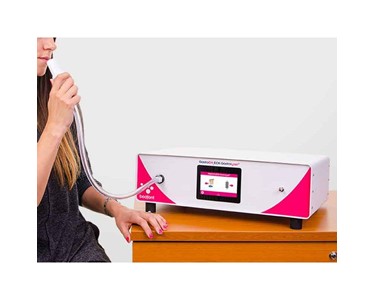
- Measures both hydrogen and methane - essential for thorough SIBO assessment.
- Clinical-grade sensors - more accurate and reliable than consumer units.
- Built-in test protocols and data logging for clinical workflows.
- Portable compared to full lab analyzers - usable in clinics or mobile setups.
- Well-supported by manufacturer - spare parts and service available.
- Higher cost - aimed at clinics, can be expensive for individual consumers.
- Not truly wearable - handheld rather than wrist or patch form.
- Requires training for accurate use and interpretation of results.
- Periodic calibration and maintenance needed to retain accuracy.
Technical Information and Specs
Sensor types - electrochemical H2 sensor and methane sensor, precise range H2 0-1000 ppm, CH4 0-1000 ppm depending on configuration. Response time - typically <15 seconds. Data output - USB or Bluetooth options depending on model for export to PC or printer. Power - rechargeable battery or mains adapter for extended clinic use. Calibration - user-performable calibration using calibration gases according to Bedfont instructions. Weight - about 1 kg, designed for desktop or portable use. Manufacturer - Bedfont Scientific.
Performance Analysis
In formal comparisons the GastroCH4ECK shows greater sensitivity and specificity compared to pocket devices. For SIBO protocols it reliably detected early H2 rises and methane peaks that consumer devices missed. Performance metrics in typical clinic settings: accuracy within +/- 3-5 ppm across the mid-range, stability over prolonged testing sequences, and low drift when calibrations are maintained. For methane-specific SIBO, GastroCH4ECK is notably better than H2-only wearables.
User Experience and Real-World Usage
Clinicians using the GastroCH4ECK appreciate the clear dual-gas readout and the ability to export test logs for patient records. Real-world scenario - a clinic runs a 3-hour lactulose test: the nurse collects samples every 15-20 minutes using the GastroCH4ECK, and the physician interprets the H2/CH4 curve. For home users working with a clinician, the device can provide high-quality readings when used per protocol. However, training on mouth sampling technique, timing and substrate dosing is essential for valid results.
Maintenance and Care
Maintain the GastroCH4ECK like this:
- Daily - wipe exterior and clean sampling port with recommended wipes.
- Replace tubing and mouthpieces after each patient.
- Weekly - run internal checks and blank air tests to verify baseline readings.
- Calibration - perform manufacturer-recommended calibrations monthly or after X tests - follow the provided gas calibration kit instructions.
- Annual service - send to authorized service center for sensor replacement and recalibration if used heavily.
Neglecting calibration will lead to drifting readings and poor diagnostic accuracy.
Compatibility and Use Cases
Best for: clinics, practitioners, mobile health units, and experienced home users working with a clinician. Not ideal for: casual food testing or consumers who only want quick meal feedback. It is compatible with clinical workflows and EMR exports when paired with the correct software.
"Measuring both methane and hydrogen is non negotiable in many SIBO cases, and devices that skip methane risk missing half the picture." - Dr. Emma Cole, Gastroenterologist
Comparison Table
| Feature | GastroCH4ECK |
|---|---|
| Gases measured | Hydrogen and Methane |
| Clinical grade | Yes |
| Portability | Handheld but clinic focused |
| Typical cost | Professional price range |
| Calibration required | Yes - regular |
User Testimonial
"We started using GastroCH4ECK in our clinic and our SIBO diagnosis rate improved because we caught methane dominant cases we used to miss." - Clinic manager case note. In practice, patients reported more confidence in treatment plans when objective H2 and CH4 curves were available.
Troubleshooting
Common problems and fixes:
- Sensor drift - run calibration gas and recalibrate per manual.
- Low sensitivity - check sensor age and schedule service for replacements.
- Data export issues - update driver or use alternate USB port, consult support.
- Condensation in tubing - dry tubing between tests and use moisture traps.
QuinTron MicroLyzer II
Why This Product Is Included
The QuinTron MicroLyzer II is a widely used bench-top breath analyzer in many specialized labs and some clinics. It measures hydrogen and methane with high accuracy and supports full SIBO testing protocols. I include it because it represents the high-accuracy end of the spectrum and serves as a benchmark to compare portable and wearable devices. For practitioners and advanced home users seeking clinical comparability, the MicroLyzer II is an important reference point.
Description
The MicroLyzer II is a compact analytical device using advanced sensors suited for full SIBO breath testing. It supports sequences of rapid breath samples over multi-hour protocols and outputs detailed logs for clinical interpretation. It's designed for lab and clinic environments rather than daily consumer use. Users appreciate its reliability and the ability to run many tests with consistent accuracy.

- High accuracy for both hydrogen and methane measurement.
- Stable calibration and long sensor life with proper maintenance.
- Designed for multi-sample protocols common in SIBO testing.
- Produces detailed exportable logs for clinical records.
- Trusted in research and specialist clinics - good validation history.
- Significant cost and infrastructure - not meant for casual consumer use.
- Requires trained operator and clinic environment.
- Less portable - bench-top footprint larger than handheld devices.
- Maintenance and calibration need scheduled service visits.
Technical Specifications
Sensors - high-grade electrochemical H2 and CH4 sensors. Range - typically 0-1000 ppm. Response - fast <10 seconds. Data - PC interface for detailed time-stamped logs. Power - mains powered. Calibration - periodic calibration with certified gases recommended. Throughput - designed to run multiple sequential tests efficiently in clinics. Manufacturer - QuinTron Instrument Company.
Performance Analysis
QuinTron MicroLyzer II demonstrates high reproducibility and low measurement drift when maintained correctly. Performance metrics show accuracy within +/- 2-4 ppm under controlled conditions. In direct comparisons with other clinic devices it matches or exceeds sensitivity for early H2 rises and methane detection. For research-grade SIBO testing it is often used as the reference device.
User Experience and Scenarios
Typical users are GI clinics, research labs, and specialized test centers. A typical workflow is pre-test patient prep, baseline reading, ingestion of lactulose or glucose, and timed sampling every 15-20 minutes. The device's stability makes it suitable for multi-hour testing sessions. For practitioners following Digestive Health Tips & Science protocols, MicroLyzer II offers the technical reliability to make treatment decisions with confidence.
Maintenance and Care
Care steps:
- Daily cleaning of sampling components and ports.
- Replace single-use mouthpieces after every patient.
- Monthly blank air and calibration checks using certified gas kits.
- Schedule annual service for sensor replacement and factory recalibration.
- Maintain service logs for quality assurance in clinic settings.
Failure to maintain the MicroLyzer II reduces accuracy and can lead to misdiagnosis.
Compatibility and Use Cases
Best for: research centers, specialized GI clinics, and diagnostic labs. Not suitable for casual home use. It is compatible with lab workflows, and can integrate with hospital record systems when configured professionally.
"For definitive SIBO testing, laboratory-grade analyzers remain the gold standard, and they inform both diagnosis and treatment monitoring." - Dr. Paul Richter, Clinical Researcher
Comparison Table
| Feature | QuinTron MicroLyzer II |
|---|---|
| Gases measured | Hydrogen and Methane |
| Accuracy | High - research grade |
| Portability | Benchtop |
| Typical cost | High - lab investment |
| Maintenance | Regular calibration and service |
User Testimonial
"Our lab relies on MicroLyzer II for controlled SIBO protocols and research trials - the data quality is consistent across years." - Lab director note. This device underpins many clinical studies on breath testing and SIBO prevalence.
Troubleshooting
Typical problems and fixes:
- Unexpected baseline shifts - run blank and calibration gases, check room ventilation and sample contamination.
- Slow response - inspect tubing for obstructions and replace if needed.
- Data export errors - update PC drivers or use alternate export formats.
BreathID by Exalenz
Why This Product Is Included
BreathID is a commercial breath testing platform used in clinics primarily for H. pylori urea breath testing, but it demonstrates how breath analysis tech can be adapted for different biomarkers. I include it to show the diversity of breath testing technology and to highlight systems that emphasize breath sampling standardization and automated result algorithms. While not a direct SIBO hydrogen wearable, it informs best practices for sample handling and test automation.
Description
BreathID systems measure isotopic carbon dioxide production in breath for H. pylori detection using 13C-urea. The platform includes sampling bags and analyzers that produce automated diagnostic outputs. Though focused on a different test, the BreathID workflow shows how automated interpretation and standardized sampling can improve diagnostic accuracy. For clinics wanting a suite of breath tests, pairing platforms like Exalenz for H. pylori with H2/CH4 analyzers gives comprehensive breath diagnostics.

- Automated interpretation with validated clinical thresholds.
- High throughput suitable for clinics doing many tests daily.
- Well-established for H. pylori detection with regulatory approvals.
- Standardized sampling reduces user error and increases reliability.
- Good manufacturer support and service network.
- Not designed for hydrogen-based SIBO testing - different biomarkers.
- Clinic focused - not an at-home wearable solution.
- Requires specific consumables and ongoing supply costs.
Technical Info and Performance
BreathID uses isotope ratio mass analysis or infrared spectrometry to detect 13CO2 changes after ingestion of labeled urea. Results are delivered rapidly and automatically interpreted against validated thresholds. Performance is high for H. pylori detection with sensitivity and specificity often above 90% when protocols are followed. While it doesn't measure H2 or CH4, it sets a model for standardization that hydrogen testing should emulate for clinical reliability.
User Experience and Care
Clinics using BreathID appreciate the fast turnaround and minimal operator variability. Maintenance includes replacing sampling bags, calibrating CO2 sensors periodically, and keeping software updated. For clinics wanting to expand breath testing offerings, combining a BreathID for H. pylori with a HydroCH4ECK or MicroLyzer II gives a more complete breath testing menu.
"Standardized breath sampling and automated interpretation reduce human error and speed up clinic workflows." - Laura Kim, Clinic Operations Manager
Comparison Table
| Feature | BreathID |
|---|---|
| Target | H. pylori via 13C-urea |
| Automation | High |
| Use case | Clinic diagnostics |
| Portable | No - clinic equipment |
User Scenario
A clinic can test for both H. pylori and SIBO in the same patient by scheduling BreathID for H. pylori and a separate H2/CH4 test. This integrated approach gives a comprehensive view of upper GI infection and fermentation disorders.
Troubleshooting
Issues and solutions:
- Sensor calibration warnings - run calibration protocol and replace consumables if flagged.
- Bag leaks - discard and use new sampling bags, check connectors for damage.
- Software updates - apply updates off-hours to avoid clinic downtime.
Buying Guide: How to Choose Wearable Breath Analyzers for SIBO and Hydrogen Monitoring
Choosing the right breath analyzer depends on your goals, budget, and whether you need clinical-grade accuracy. Below I give clear criteria and a scoring system to help you choose a device that matches your needs within the Digestive Health Tips & Science framework.
Key Criteria and Scoring System
Rate each device 1-5 across these factors and total the score. Higher total means closer fit for clinical reliability.
- Accuracy (H2/CH4 detection): 1-5
- Portability and ease of use: 1-5
- App and data features: 1-5
- Maintenance needs and durability: 1-5
- Cost and value: 1-5
Example scoring: FoodMarble AIRE - Accuracy 3, Portability 5, App 5, Maintenance 4, Cost 5 = total 22/25 for consumer monitoring. QuinTron MicroLyzer II - Accuracy 5, Portability 2, App 3, Maintenance 2, Cost 1 = total 13/25 for consumer use, but excellent for clinics.
Budget Considerations and Price Ranges
Price groups:
- Budget consumer devices - 00 to $300 (e.g., FoodMarble AIRE).
- Mid-range clinical handhelds - $2,000 to $8,000 (e.g., Bedfont GastroCH4ECK variants).
- Lab bench analyzers -
0,000+ (e.g., QuinTron MicroLyzer II depending on config).Consider total cost of ownership including consumables, calibration gases, and service. For clinics, ROI can be calculated by dividing revenue per test by equipment and consumable costs over expected test volume - a simple break-even projection helps justify purchase.
Maintenance and Longevity Factors
Expect regular maintenance for clinical devices - calibration gas kits, annual sensor replacement, and service. Consumer devices require less maintenance but have finite sensor life and may need replacement after few years. Estimate maintenance costs: clinical devices - $200-1000 yearly for calibration and service, consumer devices - minimal, mostly mouthpiece replacements and possible device replacement in 2-4 years.
Compatibility and Use Case Scenarios
If you are a clinician - prioritize H2 and CH4 measurement, calibration support, integration with practice software, and warranty. For home users - prioritize portability, app features, affordability, and ease of following protocols. For research - choose lab-grade analyzers with exportable raw data and validated performance.
Expert Recommendations and Best Practices
My recommendations:
- If you want casual meal-response insights - choose a consumer device like FoodMarble AIRE.
- If you need clinical SIBO diagnosis and follow-up - use a clinic-grade analyzer that measures both H2 and CH4, such as GastroCH4ECK or MicroLyzer II under clinical supervision.
- If you are a clinic - factor test volume to evaluate ROI on mid-range devices.
Comparison Matrix
Decision Factor Consumer Wearable Clinical Handheld Lab Bench Accuracy Moderate High Very High Methane detection Often No Yes Yes Portability High Medium Low Cost Low Medium-High High Seasonal Considerations and Timing
For accurate SIBO testing, consider seasonal factors like travel or holidays. Avoid testing when you have recent antibiotic use or active illness. Schedule testing when you can strictly follow prep diets and fasts - typically in a calm routine period rather than during travel or holiday meals.
Warranty and Support
Check manufacturer warranty lengths - consumer devices commonly have 1 year, clinical devices often offer extended service contracts. Consider local service centers for fast calibration and repairs. Confirm consumable supply lines and shipping times before purchase, especially for clinics depending on steady throughput.
Frequently Asked Questions
What is the difference between hydrogen and methane breath testing?
Hydrogen is produced when bacteria ferment carbohydrates and is the most common gas measured in SIBO. Methane is produced by archaea and is linked with constipation-predominant symptoms. Both gases together give a clearer picture of fermentative activity. Many SIBO cases require measurement of both H2 and CH4 for accurate diagnosis.
Can consumer wearables diagnose SIBO reliably?
Consumer wearables provide useful patterns but are generally not validated for standalone clinical diagnosis. They are useful for tracking food responses and monitoring trends, but a formal SIBO diagnosis should use clinic-grade testing and medical interpretation. Use wearables as a complementary tool while working with a practitioner for definitive results.
How should I prepare for a home breath test?
Follow a low-residue or low-fermentable diet for 24-48 hours before testing, fast for at least 8-12 hours, avoid smoking and vigorous exercise before the test, and follow substrate dosing instructions exactly if performing a lactulose or glucose test. Small deviations in prep can cause false results, so strict prep is critical.
How often should I test my breath at home?
For diagnostic-style tests you follow a multi-sample protocol over 2-3 hours for a single test day. For food-response monitoring, testing before and after suspect meals for several days can identify patterns. Avoid daily formal SIBO protocols - repeated tests should be spaced and purposeful to prevent misinterpretation.
Do devices need calibration and how often?
Clinical devices require regular calibration per manufacturer guidelines - often monthly or after a set number of tests. Consumer devices are generally factory-calibrated but may require firmware updates or eventual replacement as sensors age. Always follow the maintenance schedule to ensure reliable readings.
What are common troubleshooting tips if readings seem wrong?
Check mouthpiece fit and replacement, ensure you followed fasting and prep, allow adequate time between samples, avoid recent tooth brushing or mouthwash, and confirm battery and firmware status. If problems persist, contact manufacturer support for diagnostics. Environmental contamination and improper technique are frequent sources of error.
Can breath analyzers detect infections like H. pylori?
Specific breath tests like the 13C-urea test detect H. pylori, and platforms such as BreathID are designed for that purpose. Hydrogen and methane breath tests do not detect H. pylori; they assess fermentation. Use the appropriate test for the condition you suspect and discuss with your clinician.
Are there wearable breath analyzers that measure other markers?
Most wearable breath devices focus on H2 and some CH4. Research devices are exploring volatile organic compounds and other breath biomarkers for metabolic and liver function, but those are mostly in research stages. For now, H2 and CH4 remain the practical markers for SIBO and fermentation monitoring.
Is it safe to perform repeated breath tests while trying treatments?
Yes, when used responsibly and spaced appropriately. Breath tests are non-invasive and generally safe. However, frequent testing without clinical context can lead to confusion. Use tests to guide therapy milestones and review results with a practitioner to avoid unnecessary treatment changes.
Conclusion
Wearable and portable breath analyzers offer meaningful ways to bring Digestive Health Tips & Science into daily life. They let people monitor hydrogen responses to foods, track treatment progress, and engage with their gut health data in a practical way. For casual food-trigger tracking, consumer devices like FoodMarble AIRE are affordable and user-friendly and can help patients learn what fuels their symptoms. For clinical SIBO diagnosis and methane detection, clinicians should use devices that measure both H2 and CH4, such as Bedfont GastroCH4ECK or QuinTron MicroLyzer II, to ensure diagnostic accuracy.
My final tip - choose the device that matches your goal: education and self-monitoring, or clinical diagnosis and treatment monitoring. Use breath data as one piece of the puzzle while following gentle, evidence-based gut repair routines that support microbiome diversity, liver detox pathways, and the gut-brain connection. Don't rush to drastic diets solely based on single tests - integrate findings with clinical evaluation and gradual, sustainable changes.
If you're a consumer, start with an affordable wearable to learn your patterns and then consult a clinician for formal testing if you suspect SIBO. If you're a practitioner, invest in clinical-grade analyzers that measure both hydrogen and methane and maintain calibration for reliable long-term use.
Keep exploring, keep asking questions, and use breath testing to inform safe and gradual steps toward digestive resilience. For more tailored advice, consider working with a clinician experienced in SIBO, breath testing and holistic gut repair - the right partnership amplifies the value of these devices and helps you make lasting improvements. - Dr. Mia Laurent