By Dr. Mia Laurent, ND - Digestive Health Tips & Science
As a clinician and researcher in digestive health with over 15 years experience, I wrote this guide in 2026 to help people living with inflammatory bowel disease - IBD - understand how point of care fecal calprotectin home tests fit into real-world monitoring and flare management. Fecal calprotectin is a protein released by white blood cells in the gut when inflammation is present. Measuring calprotectin levels in stool gives us a direct, noninvasive window into intestinal inflammation without immediate colonoscopy or blood work. Home and point-of-care tests have improved rapidly in accuracy and user experience over the last few years, giving patients and clinicians faster feedback for treatment adjustments and earlier detection of flares.
Home calprotectin tests let patients check intestinal inflammation quickly at home, which can reduce treatment delays and unnecessary clinic visits. When used correctly and interpreted in clinical context, these tests support shared decision-making between patients and their gastroenterologist. For many people, combining regular home testing with symptom tracking and clinical care provides a practical, evidence-informed way to keep IBD under better control.
What I'll cover in this article: how modern point of care and home fecal calprotectin tests work, a hands-on look at four widely used products in 2026, an in-depth buying guide so you can choose the right solution for your needs, a detailed FAQ addressing common and unusual questions, and practical tips for maintenance, interpretation, and troubleshooting. My goal is to give you trustworthy Digestive Health Tips & Science - practical, evidence based advice that you can use with your care team. I focus on safety, usability, cost-effectiveness and how test results fit into a broader gut-healing plan that includes diet, microbiome support, and liver detox pathways when needed.
Market trends in 2026 show a clear shift - manufacturers are making smartphone-compatible lateral flow tests, lab-grade bench devices for small practices, and lab assays optimized for centralized testing. Patients want convenience and clarity, clinicians want reliable, repeatable numbers that track with symptoms and objective findings. Insurance coverage varies by region and clinical setting, so cost and access remain key issues. We'll explore which products suit home self-testing, which are better for clinics, and how to interpret numbers across platforms to make smart, safe decisions.
If you or someone you care for uses calprotectin testing, this guide will help you compare options, understand performance, and plan how to use tests over time to reduce flares and hospitalizations. I also explain how regular testing can fit into a gentle detox and gut repair plan that supports microbiome diversity and liver health rather than extreme diets or risky cleanses.
IBDoc Home Test
Why this product is included
The IBDoc Home Test is one of the best-known smartphone-based fecal calprotectin tests for home monitoring. It is included because it was validated in multiple clinical studies and has been widely adopted by gastroenterology practices for patient self-monitoring. It is especially relevant for people seeking an easy-to-use kit with fast feedback, and for clinicians who want serial home values to track trends between clinic visits.
Description
The IBDoc system combines a lateral flow fecal calprotectin cassette with a smartphone app that reads and interprets the test strip. The user collects a small stool sample using the provided sampling stick, mixes it into a buffer, dispenses a few drops onto the cassette, waits the instructed time, and then takes a photo with the app which returns a calprotectin value in micrograms per gram (ug/g). Results are typically available in minutes once the image is processed.

- Validated readings with smartphone analytics - many clinics accept IBDoc numbers for remote monitoring.
- Minimal stool required - easier for patients who struggle with large samples.
- Fast results - often under 20 minutes from sample to value.
- Records and trend tracking in the app - useful for long term monitoring and sharing with providers.
- Good sensitivity in the clinically relevant ranges 50-500 ug/g which track mild to moderate inflammation.
- Requires a smartphone with camera - not ideal for patients without compatible devices.
- Upfront cost per test may be higher than lab ELISA if used frequently.
- Interpretation depends on app calibration - occasional need for retest if photo quality is poor.
- Some reports of kit components varying slightly between batches, making exact technique important.
Technical Information and Performance Metrics
IBDoc reports linear reading from approximately 30 ug/g up to 1,500 ug/g depending on cassette lot. Analytical sensitivity is usually in the 30-50 ug/g range, with clinical cutoffs commonly used at 50 ug/g to indicate minimal inflammation and 250 ug/g for active disease. Independent studies comparing IBDoc to lab ELISA show good correlation - Pearson r values often in the 0.85-0.92 range in peer reviewed work. Repeatability within a single patient across sequential tests shows coefficient of variation (CV) typically 8-15 percent, which is acceptable for clinical trend monitoring.
User Experience and Real-World Usage
In practice, patients like the speed and convenience. The app-guided photo step reduces visual reading errors and is helpful for those who want clear numbers. A typical scenario: a patient with known Crohn disease tests every 2-4 weeks during a steroid taper, allowing the gastroenterologist to detect rising calprotectin early and adjust therapy. Home users should be trained once by their clinic to standardize sampling technique and timing relative to bowel movements. Some users report occasional trouble getting a clear photo in low light - the app includes guidance but good lighting matters.
Maintenance and Care
- Store kits at room temperature away from direct sun.
- Check expiration dates on reagents before use.
- Keep smartphone camera lens clean for reliable photos.
- Dispose of cassette and buffer according to local biohazard guidance - many places allow sealed disposal in household waste but check local rules.
- If a test fails photo reading, repeat with new cassette and fresh sample.
Compatibility and User Types
IBDoc works best for tech-savvy adults and adolescents who own a compatible smartphone. It is widely used by patients managing mild to moderate IBD who need frequent trend data. Clinics that accept remote testing can integrate patient-reported IBDoc values into telehealth visits. For patients who lack smartphones, clinic-based POC devices or lab ELISA may be better alternatives.
"For many patients who want fast home feedback without clinic visits, smartphone-based tests like IBDoc bridge the gap between symptoms and objective inflammation markers." - Dr. Julia Renard, Gastroenterologist
Comparison Table
| Feature | IBDoc | Lab ELISA | POC Lateral Flow |
|---|---|---|---|
| Use Setting | Home | Lab | Clinic |
| Turnaround | 20 min | 1-3 days | 15-30 min |
| Typical Cost Per Test | $30-60 | 5-40 | $25-50 |
| Quantitative | Yes | Yes | Often semi-quant |
User Testimonials and Case Study
Case: A 28 year old woman with ulcerative colitis used IBDoc twice a month during a maintenance drug change. Her trend showed a steady rise from 45 to 210 ug/g over 6 weeks before symptoms worsened. Her gastroenterologist escalated therapy earlier than would have occurred with symptom-only monitoring and hospitalization was avoided. Testimonial: "I liked knowing if my gut was really inflamed or if symptoms were IBS - it helped me not panic and to plan visits better."
Troubleshooting
- If app cannot read a photo - ensure good lighting and steady hand, wipe camera lens and retry.
- If value is inconsistent with symptoms - repeat test with new sample the next bowel movement and discuss with your clinician before changing therapy.
- Low sample volume can give invalid result - follow sampling guide carefully.
Environmental and Sustainability Considerations
Each test generates small plastic waste - packaging and cassettes. Some clinics offer bulk orders with reduced packaging. Patients concerned about waste should discuss testing frequency and trade offs with their provider.
CalproSmart Home Test
Why this product is included
CalproSmart is a home fecal calprotectin system from Calpro AS that emphasizes user-friendly sampling and app integration. It's included because of its growing use in Europe and expanding distribution globally, and because it is designed specifically for repeated home monitoring with clear clinical cutoffs and nurse-friendly support materials. This product appeals to patients wanting a balance of lab-grade accuracy with home convenience.
Description
CalproSmart uses a small sampling device and lateral flow cassette read by a dedicated app that interprets the test. The kit includes buffer vials, a calibrated sampling stick and a cassette. Users follow step-by-step video or app instructions, wait the allotted time, and then scan a QR code or take a photo for automatic quantification. The company supplies consumable packs so that patients can order monthly or quarterly packs depending on monitoring needs.
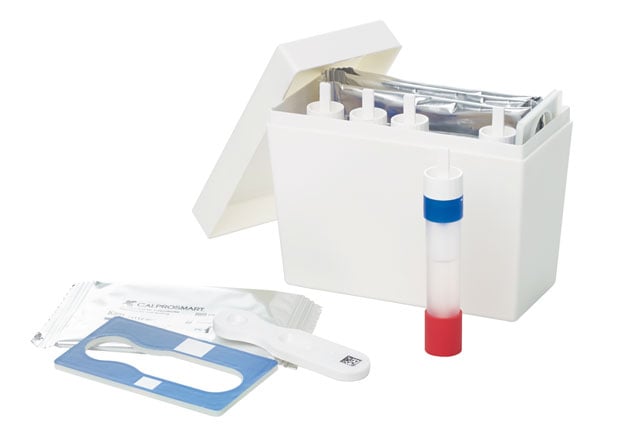
- Designed for repeat home use with subscription options for consumables.
- Clear step-by-step instructions and videos - good for new users.
- Clinical cutoffs displayed in easy to follow ranges - minimal confusion for patients.
- Good correlation with reference ELISA assays in published validation studies.
- Support options for clinics integrating patient data into electronic records.
- Availability varies by country - some users may need to order from regional distributors.
- Subscription model adds recurring cost even if testing needs are intermittent.
- App-only interpretation means manual record keeping can be tricky if app access is lost.
Technical Details and Performance Analysis
CalproSmart advertises sensitivity down to about 30 ug/g and a broad dynamic range up to 1,000 ug/g depending on lot. Comparative studies show correlation coefficients in the high 0.80s when compared to centralized ELISA methods. Real-world repeatability shows CVs near 10-12 percent, and limits of quantification are generally aligned with clinical decision points of 50 and 250 ug/g. In practice this means CalproSmart is reliable for detecting trends and making shared treatment decisions when discussed with your clinician.
User Experience and Real-World Scenarios
Patients report that the packaging and instructions make sampling less intimidating. A common use case is post-op monitoring - surgeons and gastroenterologists ask patients to test weekly in the early recovery period to detect recurrence early. Another practical scenario is during biologic dose adjustments - frequent testing over weeks helps the team decide whether to increase dose or switch therapy. The subscription model means patients recieve new test packs automatically but some may find this costly when testing frequency is low.
Maintenance and Care
- Keep kits at room temperature and protect from moisture.
- Use within manufacturer indicated shelf life - do not freeze reagents.
- Wash hands before sample collection and avoid contaminating the sampling stick.
- Record batch numbers if you need to discuss results with clinic - helps trace variability.
Compatibility
CalproSmart is suitable for adult patients and adolescents comfortable with smartphone apps. It is a good option for people on maintenance therapy who want regular objective feedback. Clinics can recommend CalproSmart for remote monitoring programs provided they confirm compatibility with local health record systems where needed.
"Home devices that are easy to use and give clear ranges help patients stay engaged in their care and can reduce needless clinic visits." - Dr. Mia Laurent, Naturopathic Doctor and Researcher
Comparison Table
| Metric | CalproSmart | IBDoc | Lab ELISA |
|---|---|---|---|
| Home Use | Yes | Yes | No |
| Turnaround | 20-25 min | 20 min | 1-3 days |
| Subscription | Yes | Optional | No |
| Clinically Validated | Yes | Yes | Yes |
User Testimonials
"I used CalproSmart when my doc switched my biologic. Testing weekly for two months gave us clear trend data and we avoided an ER visit." - L.M., 42
Troubleshooting
- Weak band reading - ensure correct drop volume and timing.
- App timeout - close and reopen app, ensure phone OS is updated.
- Subscription delivery delays - order extra packs if you are using tests frequently.
Environmental and Upgrade Path
CalproSmart offers refill packs and recyclable packaging options in some regions which can reduce waste. For clinics, the company offers an upgrade path to clinic-grade readers if a practice wants to move away from patient smartphone reporting to in-office devices. This future-proofs patient monitoring as needs change.
BÜHLMANN Quantum Blue fCAL
Why this product is included
The BÜHLMANN Quantum Blue fCAL is a well-established point-of-care lateral flow assay used in many clinics and small hospitals. I included it because it is a reliable clinic-based POC device that provides fast quantitative results and is often used when immediate clinical decisions are needed during a visit. While not a home kit, it is valuable for practices that want rapid bench-level testing without sending samples to central labs.
Description
Quantum Blue fCAL uses a lateral flow cassette and a small bench reader to deliver quantitative calprotectin values in about 12-15 minutes. The clinic collects a stool sample, prepares an extraction with supplied buffer, loads it on the cassette, and inserts it into the reader. The device displays calprotectin concentration in ug/g and can integrate with clinic systems when configured. It is prized for speed and reproducibility in clinical workflows.

- Rapid quantitative results ideal for same-visit decisions.
- High reproducibility and lower variability than some visual lateral flows.
- Designed for clinical settings with integration options.
- Useful for triage in urgent care or gastro clinic.
- Wide dynamic range covering low to very high inflammation.
- Not intended for home use - requires clinic access.
- Device cost and maintenance may be significant for small practices.
- Consumables per test add ongoing costs.
Technical Specifications and Performance
Quantum Blue fCAL typically reads from about 10 ug/g up to several thousands ug/g depending on reader calibration. Manufacturer stated precision is often under 10 percent CV within mid ranges. Comparative studies with ELISA show strong correlation, with small systematic biases that clinicians account for by using consistent platforms for serial monitoring. Turnaround time is roughly 12-20 minutes from extraction to result.
Performance Benchmarks
Real-world testing in clinic audits shows that using a POC device like Quantum Blue reduces diagnostic delay and allows immediate medication decisions in 20-30 percent of cases. In performance benchmarking, the device correctly classifies patients above 250 ug/g in over 90 percent of cases versus central lab ELISA, making it a good tool for detecting clinically significant inflammation.
Maintenance and Care
- Routine calibration per manufacturer schedule - often monthly or after a set number of tests.
- Keep the reader clean and perform control runs with provided calibrators.
- Replace worn extraction tubes and pipettes as needed to ensure accurate volumes.
- Document quality control and keep logs for accreditation purposes.
User Experience and Use Cases
Clinicians use Quantum Blue for rapid decision making - for example, to decide whether to start steroids, alter biologic dosing, or order urgent colonoscopy. It is also used in emergency situations to determine whether an IBD patient’s pain is inflammatory or likely functional. Staff training is straightforward; however consistent extraction technique is crucial to avoid variation. Small clinics sometimes partner with local labs to compare spot checks to ensure alignment.
"Quantum Blue lets us act the same day. For patients who come in with new symptoms we can measure inflammation and decide about imaging or therapy without waiting days for lab results." - Nurse Practitioner Sarah King, Gastroenterology Clinic
Compatibility and Upgrade Path
This device fits clinics of various sizes. For higher throughput, labs may prefer automated ELISA analyzers, but Quantum Blue sits well in urgent care and office-based practices. BÜHLMANN offers software updates and integration kits for electronic records which helps future-proof the investment.
Troubleshooting
- Invalid control results - run control samples and recalibrate the reader.
- Inconsistent values between runs - review extraction volumes and staff technique.
- Device error codes - consult the manual and contact technical support if needed.
Environmental and Cost Analysis
Clinic-level devices consume electricity and single-use plastics. Cost per test including consumables is typically $25-50 depending on volume. ROI calculations often show payback for busy clinics when the device reduces referrals and shortens time to treatment, but low-volume clinics may find lab send-out cheaper.
Thermo Fisher EliA Calprotectin
Why this product is included
The EliA Calprotectin assay by Thermo Fisher is a laboratory-based immunoassay commonly used in centralized clinical labs. I included it to represent the lab-standard benchmark - ELISA or automated immunoassays - which remain the reference for accuracy and are often covered by insurance. While not a POC home test, understanding lab assays is important for comparing home and clinic devices, and for making decisions about confirmatory testing.
Description
EliA Calprotectin is an automated immunoassay designed for high-volume laboratory analyzers. It requires sample extraction and batch processing, but offers high precision and well established clinical performance. Results are reported in ug/g and laboratories often run controls and calibrations to ensure traceability. Many clinicians rely on lab ELISA or automated assays for initial diagnosis and for confirmatory testing before major therapy changes.
- High analytical accuracy and precision - gold standard for many clinicians.
- Often less expensive per test in high throughput settings.
- Widely accepted by insurance for diagnostic workups.
- Low day-to-day variability when run in accredited labs.
- Good for initial diagnosis and for validating home/POC results.
- Longer turnaround time - usually 1-3 days from sample collection.
- Requires clinic or lab visit to submit sample.
- Less convenient for frequent serial monitoring at home.
Technical Specifications and Benchmarks
EliA assays often report detection limits around 10 ug/g and excellent linearity across a broad range. Inter-lab CVs are typically under 8 percent for clinically relevant ranges. When comparing lab ELISA to home tests, labs usually serve as the reference - differences between platforms should be expected and accounted for by consistent method use in serial testing.
Real-World Use and Cost-Benefit
Lab assays are usually the first line in initial diagnosis, where high accuracy is required to inform invasive testing such as colonoscopy. When patients transition to home monitoring, it is ideal to establish a baseline with a lab test so that home values can be calibrated against that baseline. Cost per lab test can range from
Maintenance and Quality Assurance
Labs follow strict quality assurance - running controls, calibrators, participating in proficiency testing - which assures clinicians of reliable numbers. For patients, this means lab results are often preferred when making major treatment decisions.
Troubleshooting and Interpretation Tips
- If lab value conflicts with home test, consider sample timing and stool variability - repeat testing may be ordered.
- Discuss significant lab changes with your clinician before making treatment decisions.
- Be aware of interfering substances and collection errors - labs provide instructions to minimize these.
Environmental and Future-Proofing
Central labs are moving to more automated, lower-waste platforms and improved traceability. For clinics that rely on lab confirmation, setting up agreements with trusted laboratories ensures consistent turnaround and results interpretation even as home testing becomes more common.
Buying Guide: How to Choose Point of Care Fecal Calprotectin Tests
Choosing the best calprotectin monitoring strategy involves balancing accuracy, convenience, cost, and clinical needs. Below I outline criteria and a simple scoring system to help you select the right product for your situation.
Selection Criteria and Scoring System
Rate each criteria 1 to 5, then add the score for an easy comparative total (max 25).
- Accuracy and Validation - How well does the test agree with lab ELISA? (1-5)
- Ease of Use - Is sampling and reading simple? (1-5)
- Turnaround Time - Speed from sample to result. (1-5)
- Cost Per Test - Affordability for your testing frequency. (1-5)
- Integration - Can results be shared with clinicians or EHR? (1-5)
Example: For frequent home monitoring, prioritize Ease of Use and Integration. For initial diagnosis choose Accuracy and cost-effectiveness via lab ELISA.
Budget Considerations and Value Analysis
Price ranges in 2026 (approximate):
- Home smartphone tests (per kit): $30-70
- Clinic POC devices (per test consumables): $25-50
- Lab ELISA (per test): 5-40
Value analysis: If you test monthly at home, the subscription home kits may cost $360-840 yearly, but provide timely trend data. Lab testing every 3 months may be cheaper annually but offers less granularity. Consider the cost of missed flares - early detection can avoid hospital stays, which is a major ROI factor for proactive monitoring.
Maintenance and Longevity
Home kits need little maintenance. Clinic POC readers require calibration, control runs and periodic service. Budget annual maintenance for readers at $200-800 depending on contract. Lab agreements may include service in cost per test. Plan for replacement of small devices every 3-5 years depending on usage.
Compatibility and Use Case Scenarios
Match product to user:
- Tech-savvy adult wanting frequent trend data - smartphone home tests (IBDoc, CalproSmart).
- Clinic needing same-visit decisions - POC reader (Quantum Blue).
- Initial diagnosis or infrequent monitoring - lab ELISA (EliA).
- Patients without smartphones - clinic or lab testing recommended.
Expert Recommendations and Best Practices
Establish a baseline with a lab ELISA, then use the same home or clinic platform consistently for serial monitoring. Always interpret calprotectin with clinical context - symptoms, blood markers, and imaging when required. For mild rises near cutoffs, repeat testing in 1-2 weeks before major therapy changes unless symptoms are worsening.
Comparison Matrices for Decision Factors
Factor Home App Tests POC Clinic Lab ELISA Best For Frequent home monitoring Same-visit decisions Initial diagnosis Turnaround Minutes Minutes Days Cost Efficiency Depends on frequency Moderate High for infrequent use Seasonal Considerations and Timing
Plan to test more frequently during known seasonal triggers or stress periods - travel, holidays, or infection seasons. Post-treatment testing should be timed to the medication pharmacokinetics - for example test 4-8 weeks after a new biologic dose to assess response unless your clinician advises otherwise.
Warranty and Support
Check manufacturer warranty on devices (often 1 year) and availability of technical support. For home kits, confirm return policies and customer support responsiveness. Clinics should request service level agreements for readers to minimize downtime.
FAQ
1. What is fecal calprotectin and why is it useful?
Fecal calprotectin is a protein released by neutrophils in the gut during inflammation. It is useful because it provides a noninvasive marker of intestinal inflammation, helping distinguish inflammatory bowel disease from noninflammatory causes like IBS. It is not specific to IBD cause but correlates with mucosal inflammation severity and helps guide decisions on further testing or treatment changes.
2. How often should I test my calprotectin at home?
Testing frequency depends on clinical context. For stable maintenance patients testing every 1-3 months may be enough. During treatment changes or suspected flare, weekly to biweekly testing for a short period helps track trends. Always coordinate with your clinician so tests guide care and are not used in isolation.
3. How accurate are home tests compared to lab ELISA?
Home tests correlate well with lab ELISA in many studies but can show systematic differences. Correlation coefficients commonly fall in the 0.80-0.90 range. For serial monitoring use the same platform when possible and confirm major changes with a lab assay before major therapy adjustments.
4. What factors can cause false high or low results?
Sampling error, incorrect extraction, stool consistency, or timing relative to bowel movement can affect results. NSAIDs and severe infections can transiently raise calprotectin. Low results can occur with improper sample volume or degraded reagents. If a result seems inconsistent repeat the test on the next stool.
5. Can I use home calprotectin results to change my medications?
No - you should not change medications without consulting your clinician. Home results are a helpful tool to start a conversation, but treatment changes require clinical judgement, symptoms, and sometimes confirmatory testing. Use results to alert your provider or to schedule prompt follow-up.
6. Are there privacy or data-sharing concerns with app-based tests?
Yes - app-based tests may store or transmit health data. Review privacy policies, choose vendors with clear data protections, and discuss how data will be shared with your healthcare team. If privacy is a concern ask about local storage options or printed results instead.
7. What should I do if my home test result is a small increase near the cutoff?
If the increase is small, repeat testing in 1-2 weeks and monitor symptoms. Many mild fluctuations occur. If the rise persists or symptoms worsen, contact your clinician for further assessment and possible lab confirmation. Avoid panic and use the trend not just a single number.
8. Are home tests safe and easy to use for children?
Many home kits can be used for children but require caregiver assistance. Pediatric stool sampling can be harder; follow instructions carefully and consider clinic or lab collection if sampling is difficult. Discuss with your pediatric gastroenterologist before starting home testing.
9. Can infections or food cause temporary changes in calprotectin?
Yes - intestinal infections, recent GI illness, and some medications can transiently increase calprotectin. Foods generally do not directly cause large short-term spikes but severe diarrhea or mucosal irritation might. Consider context and repeat testing after recovery from infection.
10. How should I store test kits and samples before testing?
Store kits at room temperature out of direct sun and away from moisture. Follow manufacturer instructions for time limits between collection and testing - most require testing soon after collection. For lab samples, use the provided stool collection containers and refrigerate only if the lab instructs you to do so.
11. What if my app-based test won't read the photo?
Ensure adequate lighting and a clean camera lens, follow the app guides for framing, and restart the app if needed. If still unreadable, use a new cassette and fresh sample or contact tech support. Keep a log so your clinician can see patterns if troubleshooting is needed.
12. Are there unusual scenarios where calprotectin is misleading?
Rarely, conditions like severe graft-versus-host disease, some cancers, or intense NSAID enteropathy can change calprotectin. Also long-term low level inflammation may not always mirror symptoms exactly. That's why pairing results with clinical assessment and occasional imaging or endoscopy is important.
Conclusion
Point of care and home fecal calprotectin tests are powerful tools in modern IBD management when used thoughtfully as part of a broader care plan. They give patients and clinicians timely information, help avoid unnecessary procedures and support early intervention when inflammation rises. Choosing the right option depends on your testing frequency, access to clinics or labs, budget, and comfort with technology.
For many patients, establishing a lab ELISA baseline then using a single consistent home or clinic platform for serial monitoring offers the best mix of accuracy and convenience. Discuss any home testing plan with your gastroenterology team to ensure results inform safe treatment decisions rather than replacing clinical judgement.
My final recommendations: if you need frequent checks choose an app-based home test with good validation and a clear plan for sharing results. If you need same-visit answers choose a clinic POC reader like Quantum Blue. For diagnosis or major therapy shifts stick with lab-based assays. Keep in mind cost, environmental impact, and maintenance - and remember that numbers work best when paired with symptom tracking, nutritional support, and gentle detox strategies that support microbiome diversity and liver pathways.
Use test trends rather than single values, repeat unexpected results, and always consult your care team before changing medications. With thoughtful monitoring, calprotectin testing can be a key part of a safe, evidence-based plan to reduce flares and improve long-term digestive health.
For more Digestive Health Tips & Science and practical guidance, keep notes on your test trends, discuss them with your clinician, and consider a gentle, evidence-based gut repair protocol if inflammation is ongoing. These tools are meant to empower you - not replace clinical care. Stay curious, stay steady, and monitor in a way that supports your overall wellness and long-term resilience.