
Starting a new fiber and ending up bloated is frustrating. You want to nudge up Bifidobacteria - microbes linked with smoother motility and gut comfort - without the ballooned feeling that can follow some prebiotics.
Two common choices are inulin and apple pectin. Both are prebiotic fibers, meaning they are not digested by you but are metabolized by the microbiome. That fermentation produces short chain fatty acids that can support the gut lining. It can also produce gas. The trick is using the type and dose that encourage beneficial microbes while keeping fermentation pressure manageable.
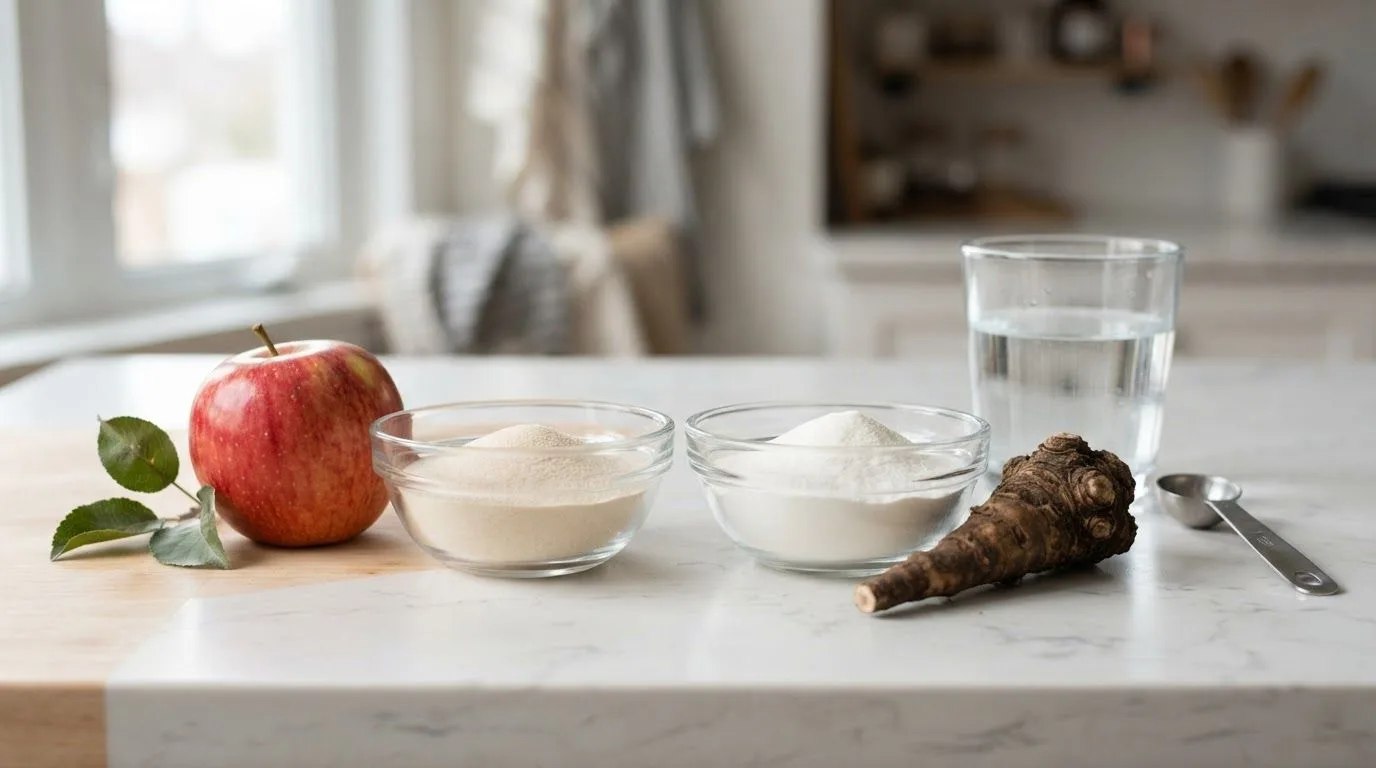
How these prebiotic fibers ferment and why that affects gas
Inulin is a soluble fiber concentrated from chicory root and agave. It includes a range of chain lengths, often with shorter fructooligosaccharides (FOS) that ferment quickly. Rapid fermentation can raise breath hydrogen by more than 20 ppm in test settings, a sign of vigorous microbial activity. This is one reason inulin is consistently bifidogenic in 16S rRNA sequencing studies. The same speed is also why higher doses can feel gassy.
Apple pectin is a soluble fiber made of galacturonic acid units. It forms a mild gel in the small intestine, slowing delivery to microbes and moderating fermentation in the colon. The result is a steadier release of short chain fatty acids such as acetate and butyrate, with fewer sharp gas spikes. Analytical labs often quantify these acids by gas chromatography or HPLC, but your real-world guide is comfort across the day.
Both fibers can support a healthier ecosystem. Inulin tends to produce a quicker rise in Bifidobacterium counts. Pectin is associated with broader cross-feeding, which may favor butyrate producers like Faecalibacterium prausnitzii. Different profiles, similar aim: a resilient microbiome and more predictable motility.
Which option is typically gentler for bloat-prone digestion
If gas and abdominal pressure are your main concern, apple pectin usually tolerates better. Its gel slows fermentation, so many sensitive digestions manage 2 to 6 g per day with fewer flares. Pectin also modestly firms loose stools thanks to that gel, a bonus when urgency is an issue.
Inulin remains useful, especially at low doses. It is well studied and reliably favors Bifidobacteria. The trade-off is dose sensitivity. Once a single serving climbs above 3 to 5 g, gas is common. For those who tolerate it, a small, steady intake can help within 7 to 14 days.
Position: start with apple pectin first. Stabilize comfort, then consider layering a small inulin dose if you want an extra bifidogenic nudge.
A two-week gentle start plan with numbers and stop points
- Days 1 to 3: Take 1 g apple pectin with breakfast and 1 g with dinner. Drink 250 to 300 mL water across the meal, not all at once.
- Days 4 to 7: If comfortable, increase apple pectin to 2 g twice daily. Keep doses with meals to buffer fermentation.
- Days 8 to 14: If still comfortable, increase to 3 g twice daily (about 6 g per day). Hold here for one week before any other change.
- Optional inulin add-on: After a stable week on pectin, add 0.5 to 1 g inulin with a meal on alternate days. If comfort holds for 3 days, step up to daily.
- Stop or reduce criterion: If bloating or cramping rises meaningfully for 48 hours, drop to the last comfortable dose or pause inulin. Resume only when baseline returns.
- Tracking tip: Note bowel frequency and stool form once daily using the Bristol Stool Scale (ideal 3 to 4 for most). Look for steadier patterns, not instant shifts.
Side-by-side traits relevant to comfort and regularity
| Practical point | Apple pectin | Inulin |
|---|---|---|
| Fermentation speed | Slower, gel moderated | Faster, especially short-chain FOS |
| Gas tendency at higher doses | Lower risk, fewer spikes | Higher risk above 3 to 5 g per sitting |
| Bifidogenic effect timing | Gradual over 1 to 3 weeks | Often within 7 to 14 days |
| FODMAP profile | Usually better tolerated in small portions | High FODMAP; common trigger in IBS |
| Stool consistency | Gel can firm loose stools | Less gel effect on stool texture |
| Best starter dose | 1 to 2 g with meals | 0.5 to 1 g with meals |
Cautions, interactions, and red flags with prebiotic fibers
Large, sudden changes in fermentable fiber can aggravate symptoms. Increase in small steps and hold each change for at least 72 hours. In suspected small intestinal bacterial overgrowth (SIBO), fast-fermenting fibers like inulin may amplify gas; clinical support is advised.
Gel-forming fibers can delay or reduce absorption of some medications. Separate fiber and prescriptions by at least 2 hours. Extra caution is sensible with narrow therapeutic index drugs such as levothyroxine, lithium, and certain cardiac medications. If you use blood glucose lowering drugs, monitor for changes as meal patterns and fiber increase.
Realistic expectations help. Prebiotics support, they do not cure. Improvements usually show as steadier bowel rhythms, less pressure after meals, or reduced urgency over 2 to 4 weeks. Seek medical care promptly for blood in stool, unexplained weight loss, persistent fever, severe or nighttime pain, or ongoing diarrhea beyond a few days.
Food sources that fit sensitive eating patterns
- Apple pectin from foods: cooked apples, unsweetened applesauce, or stewed apple with cinnamon a few times per week can provide gentle pectin.
- Other pectin-rich choices: citrus segments, berries, and homemade chia jam thickened with lemon juice supply gel-like fibers.
- Inulin-rich foods: onions, garlic, leeks, asparagus, and Jerusalem artichokes. If these bloat you, use garlic-infused oil to capture flavor without the FODMAP load.
- Hydration detail: sip water with and for 30 minutes after fiber. Chugging a large glass at once can distend the stomach and feel worse.
Mistakes that raise fermentation pressure
- Starting at 5 to 10 g inulin on day one. Smaller and slower usually wins.
- Taking prebiotics on an empty stomach. Food buffers and slows fermentation.
- Stacking multiple prebiotics at once - inulin, FOS, GOS, acacia, and pectin together.
- Big evening doses that sit overnight when motility is slower.
- Too little movement. A 10 minute walk after meals helps gas move.
FAQ on dosing, FODMAP limits, and medication timing
How much apple pectin supports Bifidobacteria without extra gas?
Start at 1 g with a meal, twice daily. Build to 3 g twice daily if comfortable. Many sensitive digestions do well between 2 and 6 g per day.
Can inulin fit during a low FODMAP phase?
Inulin is typically restricted during the elimination phase. A dietitian may allow small amounts later in reintroduction. If experimenting, begin at 0.5 g with food and evaluate for 72 hours.
Does timing matter more than the brand?
Yes. Taking fiber with meals, sipping 250 to 300 mL water across the meal, and dividing doses across the day influence comfort more than brand differences for most users.
Can I take prebiotics with a probiotic supplement?
Often yes. A simple approach is pectin with meals and a Bifidobacterium-containing probiotic as directed. Add inulin only after a stable week and keep it at 0.5 to 1 g initially.
Apple pectin
For gas-sensitive digestion, apple pectin is a practical first step. Its gel slows fermentation, often allowing useful microbiome support with fewer pressure spikes. Build gradually to 2 to 6 g per day with meals. Once comfort holds for a week, consider layering 0.5 to 1 g inulin with a meal to further encourage Bifidobacteria, increasing only if symptoms stay settled.
Small habits enhance the effect: steady hydration, regular mealtimes, and brief post-meal walks. These influence motility and gas clearance more than most powder tweaks. Use clear stop points, separate fiber from medications by 2 hours, and seek professional care if red flags appear. Patient, measured changes usually beat aggressive fiber loading.