
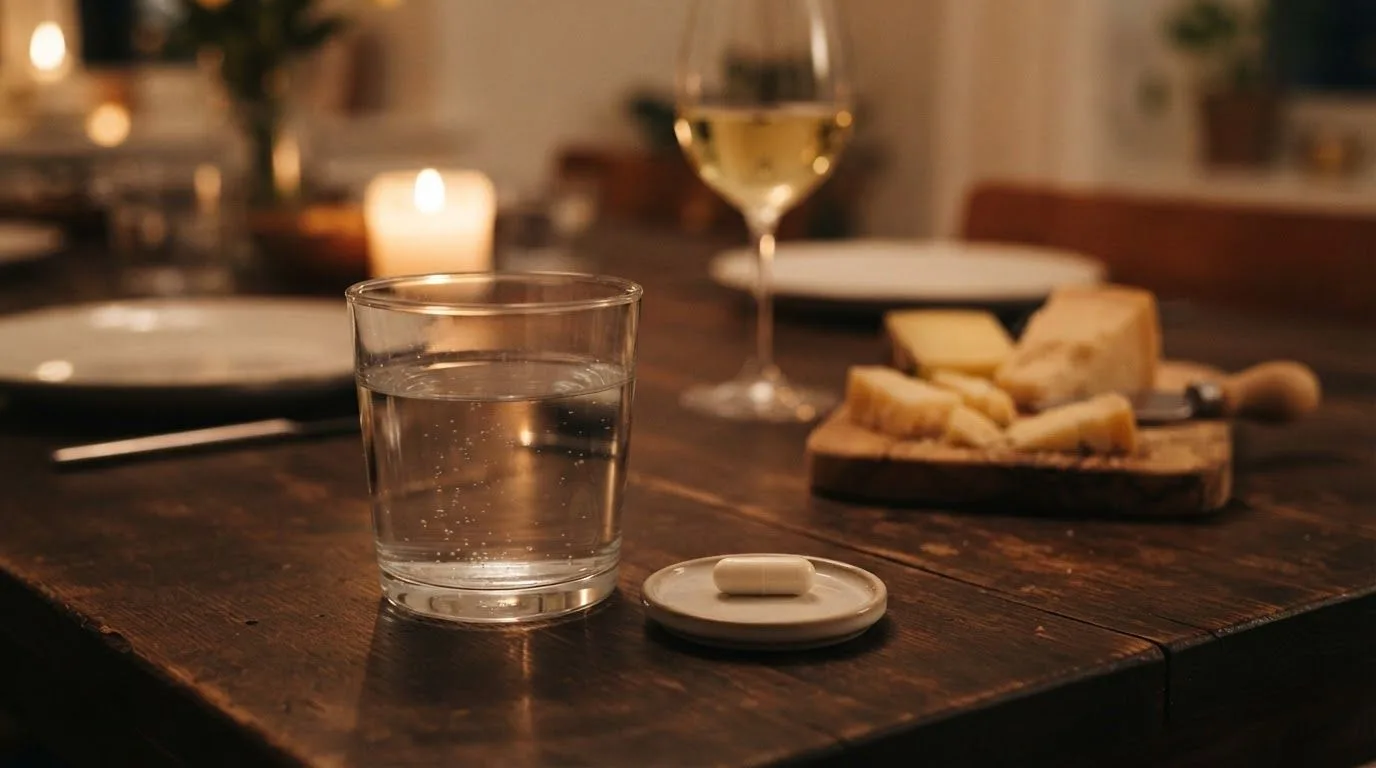
A cheese board and a glass of wine should feel easy, not like a countdown to flushed cheeks, queasy stomach, and a hurried trip to the bathroom. If these symptoms arrive within an hour of sipping or snacking on aged foods, histamine from fermentation may be part of the picture.
Diamine oxidase (DAO) is the enzyme in your small intestine that breaks down histamine in food before it crosses the gut wall. High potency DAO supplements - such as 20,000 HDU per capsule - are marketed for meals that tend to trigger symptoms, including red or sparkling wine and aged cheeses. The key question is practical: will taking 20,000 HDU before that first sip or bite actually help you feel better?
Why wine and aged cheese can provoke flushing and gut upset
Fermented and aged foods accumulate histamine as microbes metabolize amino acids during processing and storage. Lab analyses using HPLC have found wine histamine spanning roughly 2 to 10 mg per liter, with some bottles higher. Long-aged cheeses such as Parmesan, blue cheese, and aged cheddar can also carry histamine along with other biogenic amines, including tyramine and putrescine. These compounds can stimulate vasodilation and gut motility, which looks like facial flushing, mild cramping, and looser stools.
Alcohol adds a second stressor. Ethanol and its metabolite acetaldehyde can irritate the gut lining and may slow histamine breakdown. A genetic ALDH2 variant common in East Asian populations reduces acetaldehyde clearance and causes prominent flushing - DAO will not change that pathway. Portion size and pacing still matter, even with a supplement on board.
How DAO 20,000 HDU works in the gut
DAO (diamine oxidase) sits on the brush border of your small intestine where it degrades extracellular histamine from food. Supplements are typically porcine kidney extracts standardized in HDU, or histamine degrading units. A 20,000 HDU capsule is considered high potency for meals that are predictably histamine heavy, such as charcuterie, aged cheese, and certain wines.
DAO acts locally in the gut lumen, not systemically. It needs to be present before histamine arrives, which is why labels usually advise taking it 10 to 15 minutes before eating. Effects are short lived - think one meal window of roughly 1 to 3 hours. DAO targets histamine, not tyramine or sulfites, so it will not neutralize every trigger in a glass of red wine or a wedge of Roquefort.
What current evidence suggests for histamine intolerance
Clinical research on DAO supplementation is promising but still early. Small randomized and crossover studies in people with suspected histamine intolerance report improvements in composite symptom scores that include skin flushing and digestive complaints. Methods vary - from symptom diaries to measuring urinary N-methylhistamine - and sample sizes are modest, so outcomes are not definitive. That said, a consistent pattern appears: those with clearly food-triggered histamine symptoms are the likeliest to notice benefit.
Realistic expectations help. Alcohol can inhibit histamine degradation and can irritate the gut on its own. If most of your discomfort comes from sulfites, tannins, lactose, or FODMAPs, DAO will not address the root cause. Observing which foods predictably trigger you remains essential for deciding if DAO is worth keeping on hand.
Step-by-step trial protocol for wine and cheese nights
- Keep the day low histamine. Choose fresh-cooked meals and skip cured meats or leftovers.
- Pick a lower-risk test: 1 small glass of white or sparkling wine (about 150 mL) and a young cheese like fresh mozzarella instead of a 24-month Parmesan.
- Take 20,000 HDU DAO with water 10 to 15 minutes before the first sip or bite. If your product advises 2 capsules for high-histamine meals, follow the label.
- Eat with the drink. A balanced plate with protein and starch - for example chicken and rice - slows absorption and eases motility.
- Hydrate and pace. Alternate water with wine and limit to one glass during the test.
- Observe for 6 hours. Track flushing, queasiness, bloating, and stool form using the Bristol Stool Scale. Aim for type 3 to 4 rather than type 6 to 7.
- On a separate evening under similar conditions, repeat without DAO to compare. Space trials by at least 48 hours.
- Stop criterion: if there is no meaningful change across two careful tests, retire the strategy and adjust portions or choices instead.
Benefits, limits, and trade-offs to expect
- Possible benefits: milder flushing, steadier stomach, fewer urgent stools after a single glass and small portions of aged cheese.
- Limits: DAO does not break down tyramine or sulfites, and alcohol can still impair enzymes and irritate the gut.
- Trade-off: high potency DAO can cost more than 1 USD per use; consider reserving for occasions when you value flexibility.
- Variability drivers: stress, menstrual cycle phase, microbiome shifts, and recent antibiotic use can change responses week to week.
- Non-obvious insight: vegan DAO alternatives typically supply cofactors like copper rather than active diamine oxidase - effects may be limited.
Safety cautions and red flags with histamine and DAO
DAO is not appropriate for food allergy or anaphylaxis risk. It will not prevent IgE-mediated reactions to dairy proteins or any other allergen. For lactose intolerance, use lactase - DAO does not digest lactose. If you take an MAO inhibitor, avoid aged cheeses due to tyramine, which DAO does not degrade. Most DAO supplements are porcine derived; avoid if pork is not acceptable. Data are limited for pregnancy, breastfeeding, and pediatric use, so seek medical guidance first.
Seek prompt care for red-flag symptoms: blood in stool, black tarry stools, persistent vomiting, fever, nighttime abdominal pain that wakes you, or unexplained weight loss. Regular heavy drinking compounds health risks; a supplement cannot offset those effects.
FAQ on DAO timing and dosing
How long before wine or cheese should 20,000 HDU DAO be taken?
Take it 10 to 15 minutes before the first sip or bite. DAO works in the gut lumen, so timing before exposure is crucial.
Will DAO help with red wine headaches as well as flushing?
It may help if histamine is a driver. If headaches stem from sulfites, tannins, dehydration, or acetaldehyde buildup, DAO is unlikely to change them. Trial with white or rosé first to clarify your pattern.
Is 10,000 HDU enough, or is 20,000 HDU better for aged cheese?
For lighter meals, 10,000 HDU can be reasonable. For predictable triggers like aged cheese and wine, start at 20,000 HDU, then adjust up or down based on response and label guidance.
Can the capsule be opened and sprinkled on food?
Only if the label permits. Some capsules protect the enzyme from stomach acid. If opening is allowed, consume the contents immediately before the meal rather than mixing ahead.
When DAO is unlikely to help your reaction
DAO does not address non-histamine triggers. Lactose intolerance causes gas and diarrhea when undigested lactose reaches the colon - lactase helps there, not DAO. Sulfite sensitivity typically presents with wheeze, flushing, or hives after certain wines and dried fruits; sulfite content varies by brand and style, and DAO does not neutralize sulfites. An ALDH2 deficiency produces prominent facial flushing and rapid warmth after small amounts of alcohol; DAO will not change acetaldehyde buildup. If your symptoms track with these patterns, focus on substitutions and portion control rather than enzyme supplementation.
Practical next step with DAO 20,000 HDU
If histamine-rich foods and drinks are your clearest triggers, a structured trial of 20,000 HDU DAO 10 to 15 minutes before wine and aged cheese is a reasonable next step. Pair the capsule with one small glass, food in your stomach, and careful observation across two trials. Keep expectations grounded - DAO targets histamine only, and alcohol still challenges the gut. If the trial reduces flushing and keeps stools closer to Bristol type 3 to 4, save DAO for occasions that matter. If not, prioritize lower-histamine choices, limit portions, and select younger cheeses or white and rosé wines for more comfortable evenings.